Do you have
uneven skin tone & hyperpigmentation?
Uneven skin tone, dark spots, and discoloration can make your skin look older than it is. At REAL, we use advanced light, laser, and regenerative therapies to restore clarity, correct pigment irregularities, and bring back a more even, luminous complexion.
What is
uneven skin tone & hyperpigmentation?
Uneven skin tone refers to areas of the face or body that appear darker or more discolored than surrounding skin. Hyperpigmentation occurs when excess melanin—the pigment responsible for skin color—is produced in certain areas. It can present as sun spots, melasma, post-inflammatory marks, or generalized dullness. While often harmless, hyperpigmentation can be stubborn, recurring, and difficult to treat without professional intervention.
What causes uneven skin tone & hyperpigmentation?
Sun exposure
Ultraviolet (UV) rays trigger melanin production, leading to sun spots and age spots. Over time, repeated sun exposure without proper protection causes pigment to darken and spread.

Hormonal changes
Fluctuations in estrogen and progesterone—often from pregnancy, birth control, or menopause—can cause melasma, a form of hyperpigmentation that appears as symmetrical patches on the face.
Inflammation and injury
Acne, eczema, cuts, and even cosmetic treatments can trigger post-inflammatory hyperpigmentation, leaving behind dark marks after the skin heals.
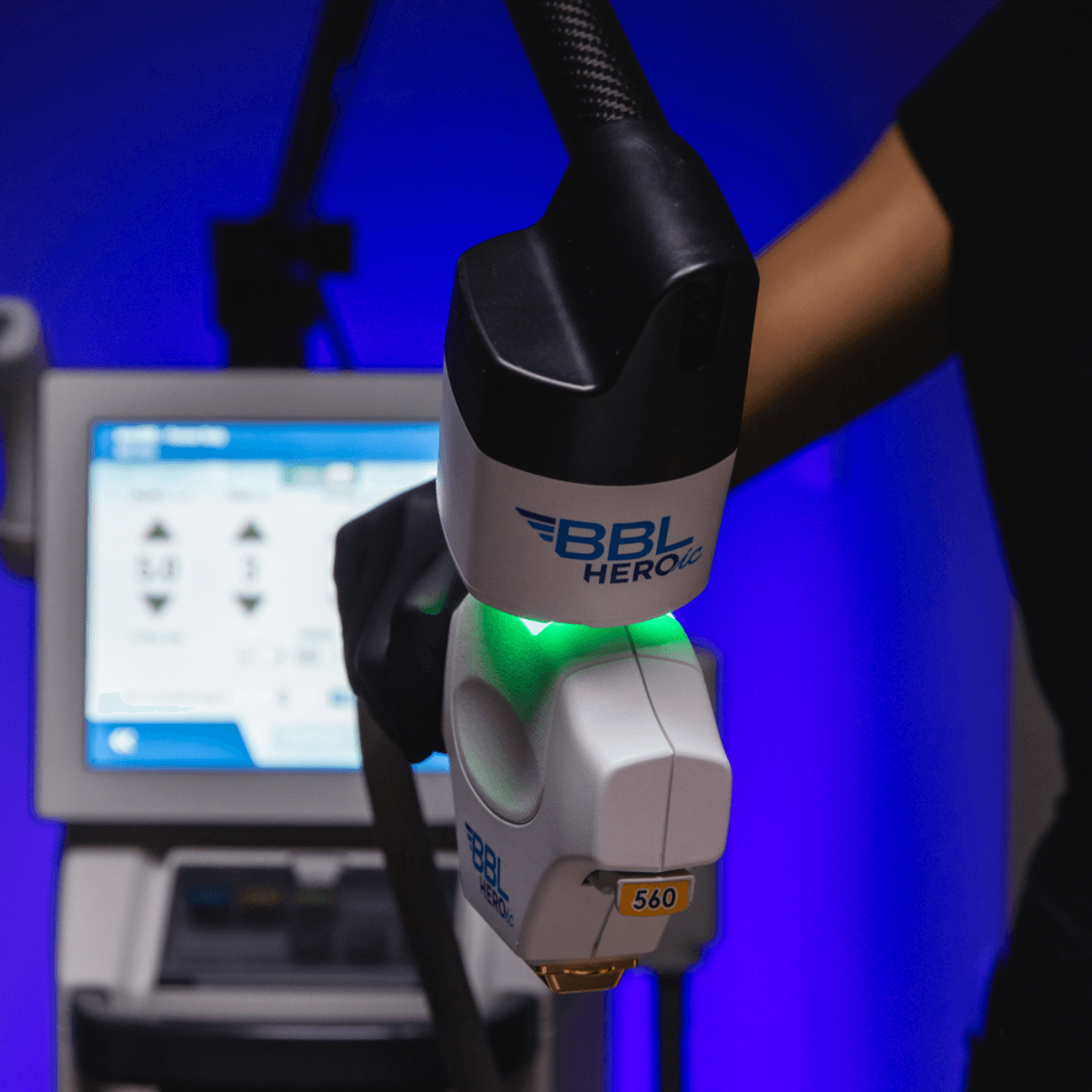
Our Recommended Treatment Options
for uneven skin tone & hyperpigmentation
Frequently Asked Questions
About Uneven Skin Tone & Hyperpigmentation
Can hyperpigmentation fade on its own?
Some mild discoloration can fade naturally over months, but persistent pigment often requires targeted professional treatment.
Does hyperpigmentation mean skin damage?
Not always, but it often indicates that the skin has been stressed or injured—whether from UV exposure, inflammation, or trauma.
Can hyperpigmentation return after treatment?
Yes. Without proper sun protection and ongoing maintenance, pigment can reappear—especially in those prone to melasma.
Are at-home products effective for hyperpigmentation?
Medical-grade skincare can help lighten pigment and prevent new spots, but deeper discoloration usually needs professional treatments for lasting results.
Is hyperpigmentation more common in certain skin tones?
Yes. While anyone can develop discoloration, medium to deeper skin tones naturally have more melanin, making them more prone to pigmentation changes.